Written by the PT Samudera Arah Ekspor technical team
Good substrates do two jobs at once: they keep water close to the roots and still let air in. Coco peat does both well, which is why growers use it on its own or as the base of a potting mix.
A sponge with air pockets
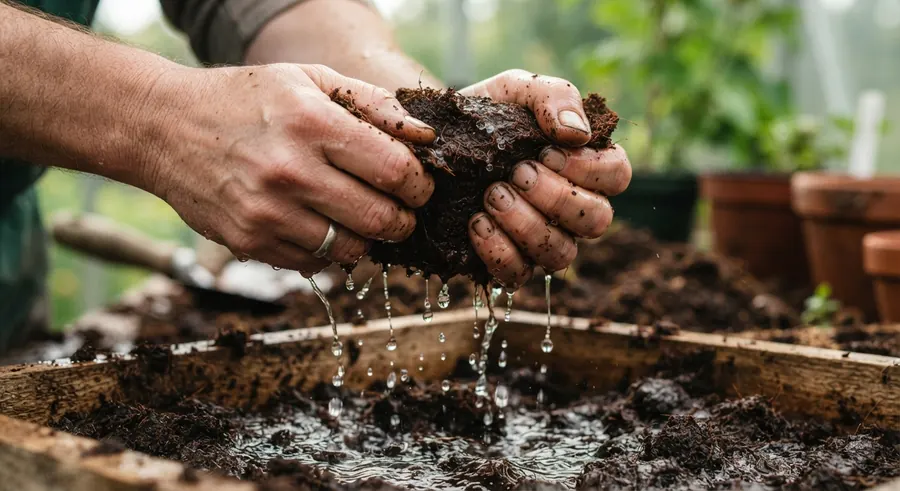
Coir pith is made of tiny, porous particles. The small pores hold water by capillary action, while the larger spaces between particles drain and fill with air. This mix of water and air is what keeps roots active and healthy.
What it means for watering
Because coco peat re-wets easily — even after drying out — you can water consistently without the substrate turning hard or water-repellent. Plants get a steady supply of moisture, and you avoid both drought stress and waterlogging.
- Water when the top layer starts to feel dry, not on a fixed clock alone.
- Use smaller, more frequent waterings in hot weather.
- Make sure containers drain freely so excess water can leave.
Mixing coco peat into potting blends
Coco peat works well on its own, but many growers blend it with perlite, compost or soil to fine-tune drainage and nutrition. More perlite gives more air; more coco peat gives more water-holding.
Quick reference
- Expanded volume
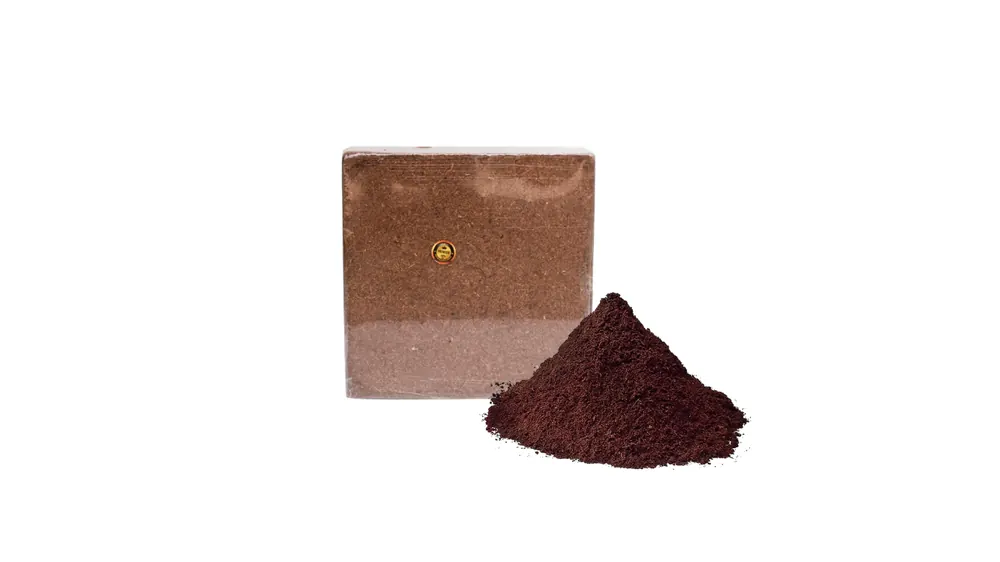
- 70–75 L per 5kg block
- Lab moisture (as shipped)
- 15.30%
- pH (1:20)
- 5.98
- Common blend
- Coco peat + 20–30% perlite