Written by the PT Samudera Arah Ekspor technical team
Coco peat gives hydroponic tomatoes what roots need most: steady moisture, plenty of air and a clean, predictable start. Here is a practical playbook for commercial greenhouse growers.
Why tomatoes do well in coco peat
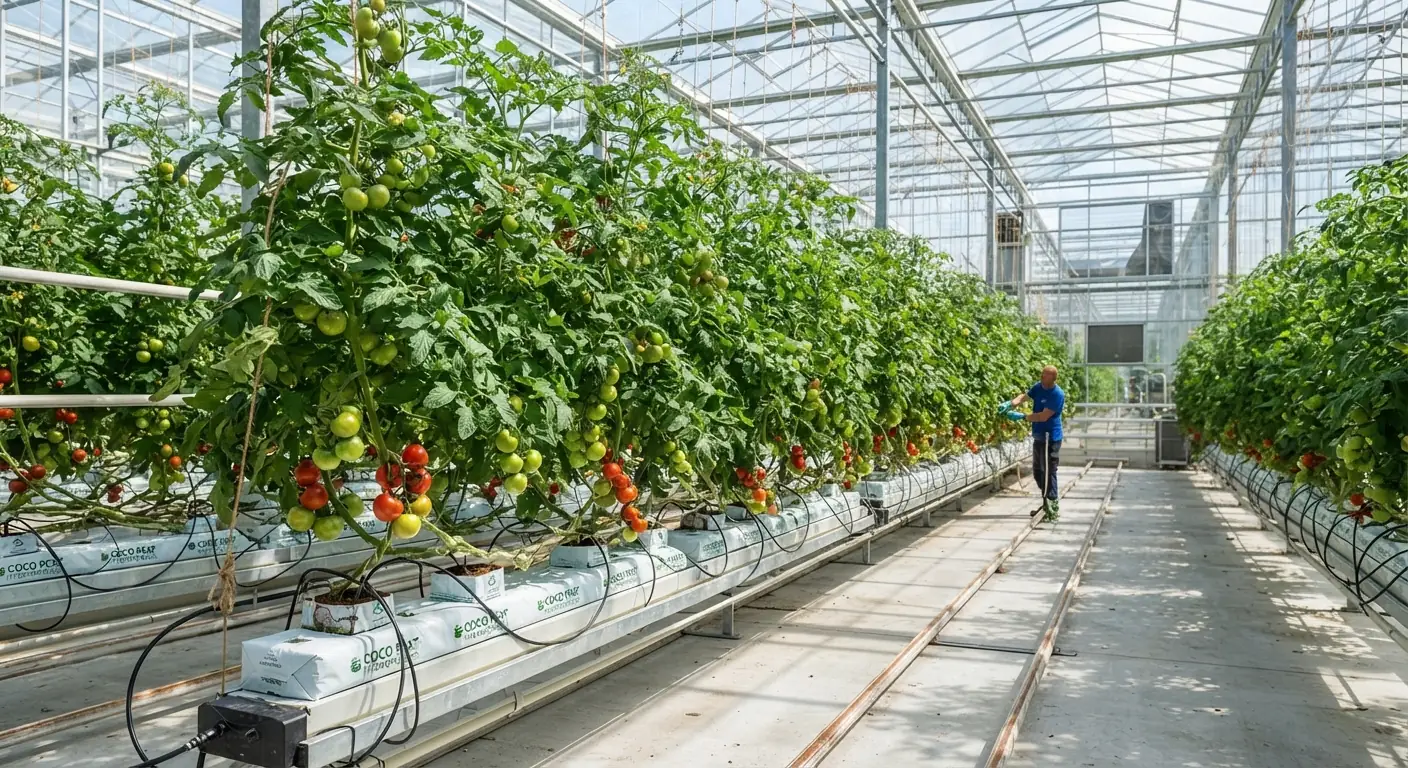
Coco peat holds plenty of water while staying open enough for oxygen to reach the roots. It is a soil-free medium, so there are fewer variables between one crop cycle and the next, which makes a feeding program easier to repeat.
Prepare the substrate before planting
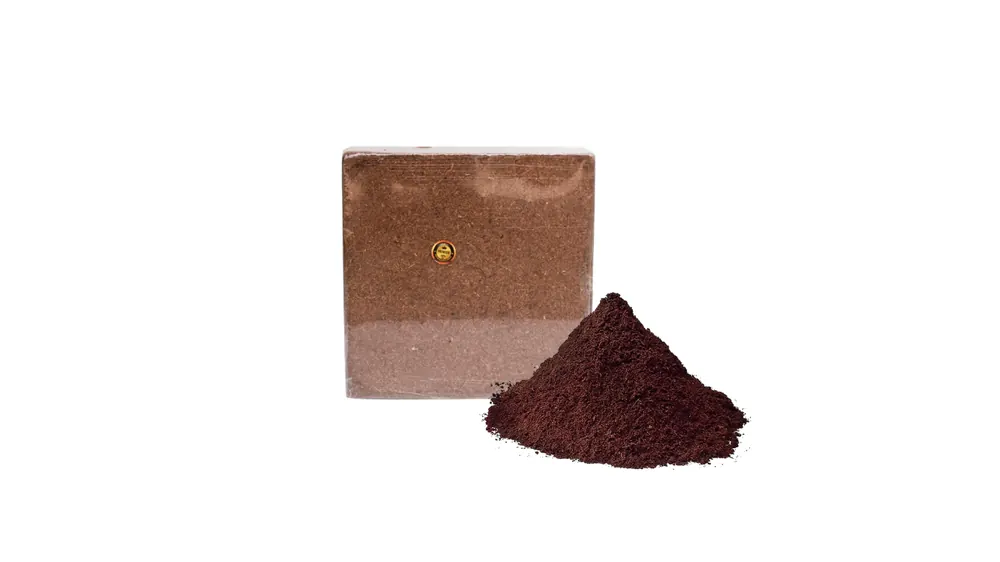
Start from compressed blocks and expand them with clean water. A 5kg block of our cocopeat expands to roughly 70–75 litres of substrate, enough to fill several grow bags or trays.
- Expand the block fully with clean water and let it settle for a few hours.
- Check the EC of the runoff and rinse again if it is higher than your crop program allows.
- Buffer with a calcium-magnesium solution if you want to condition the substrate before planting.
- Fill grow bags evenly and pre-wet them before transplanting.
Dial in pH and EC
Keep the nutrient solution pH between 5.5 and 6.5 and raise EC gradually as the plants set fruit. Measure both the feed and the runoff: if runoff EC climbs well above the feed, salts are building up and the substrate needs a flush.
Irrigate little and often
Coco peat drains quickly, so tomatoes respond best to several short irrigations through the day rather than one heavy watering. Adjust the schedule to light, temperature and plant stage, and check the runoff daily.
Quick reference
- Solution pH
- 5.5 – 6.5
- Irrigation
- Several short cycles per day
- Runoff
- Check EC & pH daily
- Substrate volume
- 70–75 L per 5kg block
Reuse grow bags with care
Grow bags can often carry more than one crop if the substrate is flushed, tested and kept free of disease. Between cycles, flush with clean water and check EC. Replace the bag if the previous plants showed root disease.